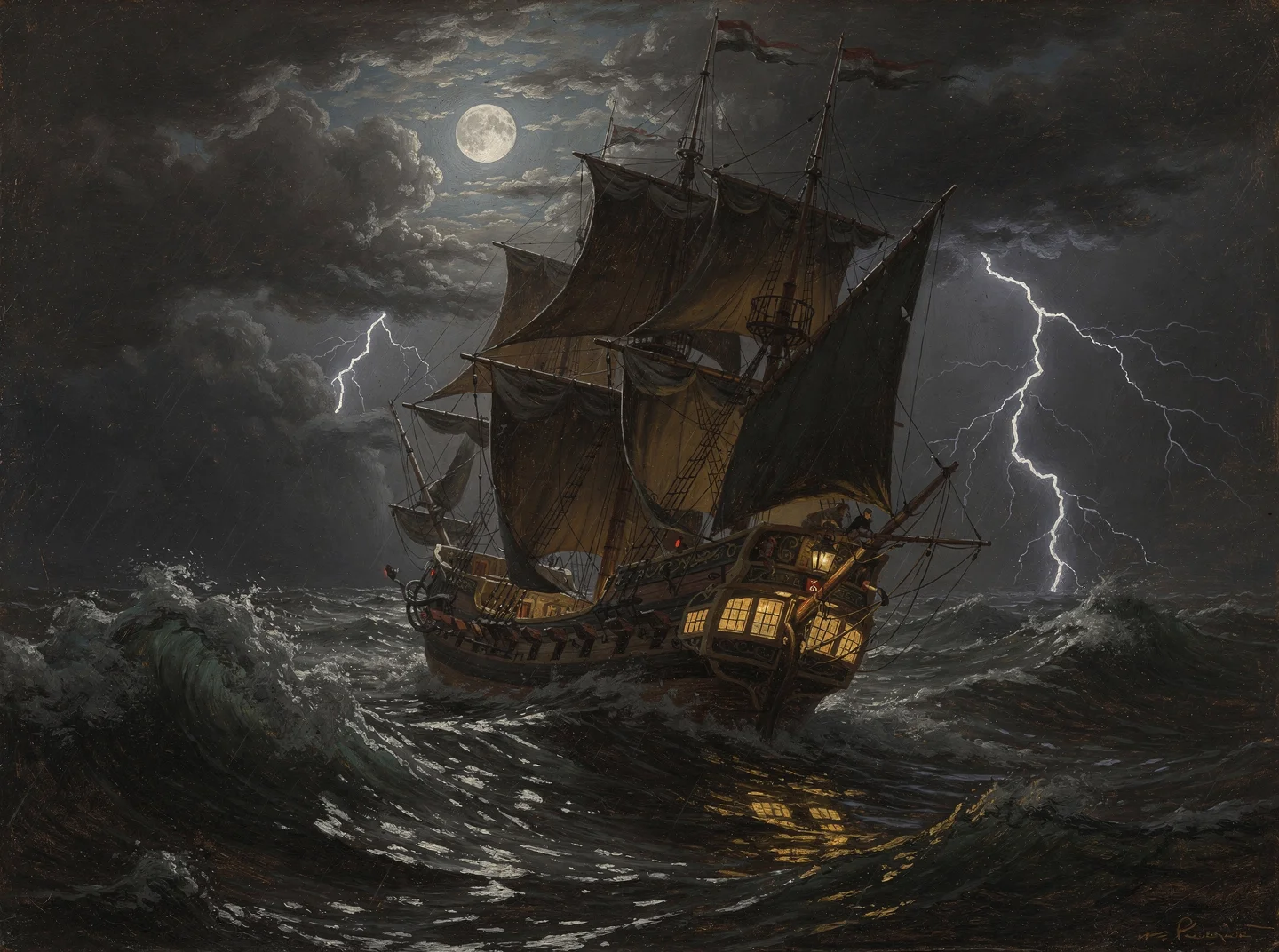
The South Sea Bubble: How England Went Broke on Shares in 1720.
The company was meant to trade with South America, where its ships hardly ever went. In eight months its shares rose eightfold, then collapsed and took thousands of families down with them.
The South Sea Company was founded in 1711, and trade was never really the point. The point was the national debt. Britain was fighting wars, the debt was growing, and the government was offered an elegant scheme: holders of government debt would exchange it for company shares, and in return the company would receive a monopoly on trade with Spain's possessions in South America.
The trouble was that those possessions belonged to Spain, with which Britain was at war. Real trade came down to the asiento, the contract to supply enslaved Africans to Spanish America, and the right to send a single ship a year. The company saw little of the riches of the New World.
The scheme
In 1720 the company offered to take over almost the entire national debt. The arithmetic was simple: the higher the share price, the fewer shares it had to hand over for each thousand pounds of debt, and the more it kept for itself.
So the shares had to rise, and they were made to rise: with tales of silver and gold, with loans to buy the company's own stock, with gifts of shares to influential people, ministers and courtiers among them.
In January a share cost around £128. By the summer it was around £1,000. Across the country people rushed to float similar ventures for every imaginable project; contemporaries listed them mockingly in pamphlets.
The crash
In the autumn came the discovery of what had been true from the start: there was almost nothing behind the shares. Holders began to sell, the price tumbled, and by December a share was back at a little over the hundred pounds it had started the year at.
It was not only speculators who were ruined. Widows, clergymen and retired officers had bought in, everyone who had been told this was safer than land. People lost estates, their daughters' dowries, the savings of a lifetime.
Among the losers was Isaac Newton, who is thought to have lost around £20,000, a fortune at the time. He is credited with saying that he could calculate the motions of the heavenly bodies, but not the madness of people.
The reckoning
Parliament opened an inquiry. It found that shares had been handed out to officials and that the company's books had been doctored. The Chancellor of the Exchequer, John Aislabie, was found guilty and sent to the Tower, and the estates of several directors were confiscated.
Robert Walpole, usually regarded as Britain's first prime minister, rose to power managing the aftermath. And the Bubble Act, passed at the height of the mania to restrict the founding of joint-stock companies, held back their development for a long time.
What happens to a man who has lost everything
The financial side of this story is well documented. The human side is much worse.
In the autumn of 1720 hundreds of people who had thought themselves rich that summer scattered across England. Some still had connections, a reputation, credit, things that could be traded for one last attempt to mend their fortunes. The debtors' prison waited for those who ran out of time.
Ruin in that age meant not poverty but disappearance: name, standing and the right to be heard were lost along with the money. People in that position do things nobody expected of them, and they do them far from home.
This article does not reveal the solution to the investigation