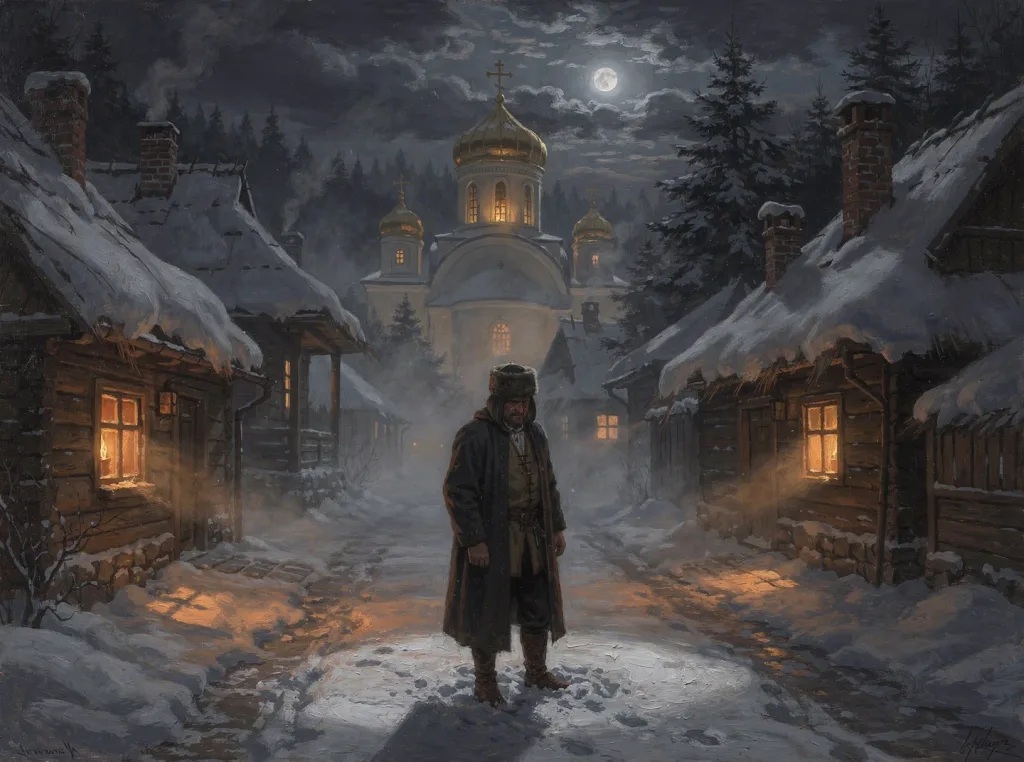
The Serbian Vampires of 1731: How an Army Report Gave Europe the Word “Vampire”.
Austrian army surgeons came to a border village to investigate a run of deaths. Their report became the first official document about vampires, and set off a panic across Europe.
The word “vampire” did not enter Europe's languages from a novel or a folklore collection. It came from a military report.
Under the Treaty of Passarowitz in 1718, part of Serbia passed to the Habsburgs. Austrian garrisons held the new frontier with the Ottoman Empire, and with them came army doctors used to writing reports by the book. When people began dying in the border villages and the locals blamed the walking dead, the doctors did what they knew how to do: they drew up a protocol.
Medveđa
The village of Medveđa, winter 1731–32. Within a few weeks more than a dozen people die. The villagers link the deaths to something that had happened a few years earlier.
Arnaut Pavle, a peasant who had served as a hajduk, used to say that he had once been troubled by a vampire and had been afraid ever since. Soon afterwards he was killed in a fall from a hay wagon. Some forty days after his burial, his neighbours said, he began appearing among the living, and four of the people who saw him died.
So the villagers opened his grave. What they found was proof enough for them: the body had not decayed, fresh blood flowed from the mouth, the nails and skin looked new. They drove a stake through the corpse and burned it, along with the bodies of the four.
Visum et Repertum
When the deaths started again, the command sent a commission. The regimental field surgeon Johann Flückinger, with fellow surgeons and officers, carried out exhumations and wrote a report titled Visum et Repertum, “Seen and Discovered”.
The document is dry and itemised: name, age, time in the grave, condition of the body. Some corpses had decomposed normally. Others had not; in the report's words they were found “in the vampiric condition”.
The report went up the chain to Vienna, found its way into print and spread across Europe. Newspapers covered the Serbian vampires, theologians and physicians argued over them, and the subject reached Voltaire and Rousseau. Maria Theresa eventually had her personal physician, Gerard van Swieten, look into such cases, and on the strength of his findings opening graves and burning bodies was banned throughout her lands.
What the villagers actually saw
The signs that the village read as proof of vampirism are explained today by decomposition. Gases bloat the body, making it look plump and “well fed”; the pressure forces bloody fluid out of the mouth and nose. The skin slips away to reveal a fresh-looking layer beneath, and the gums recede so that nails and teeth seem to have grown.
How quickly a body decays depends heavily on soil and temperature. In winter, in cold clay, a corpse can stay intact for months. The grave next to it may show nothing unusual, and the difference between the two dead will look supernatural.
But a question remains
Decomposition explains why the corpses looked alive. It does not explain why the people died.
The report lists symptoms: pain, weakness, death within a few days. The commission worked while events were unfolding, opened graves and questioned villagers, but it was looking for a vampire, not for a cause of death. The document offers no medical explanation.
And that is the most interesting part of the whole story. In a village where people die one after another within weeks and every explanation comes down to the undead, did anyone ask what the victims had in common?
This article does not reveal the solution to the investigation