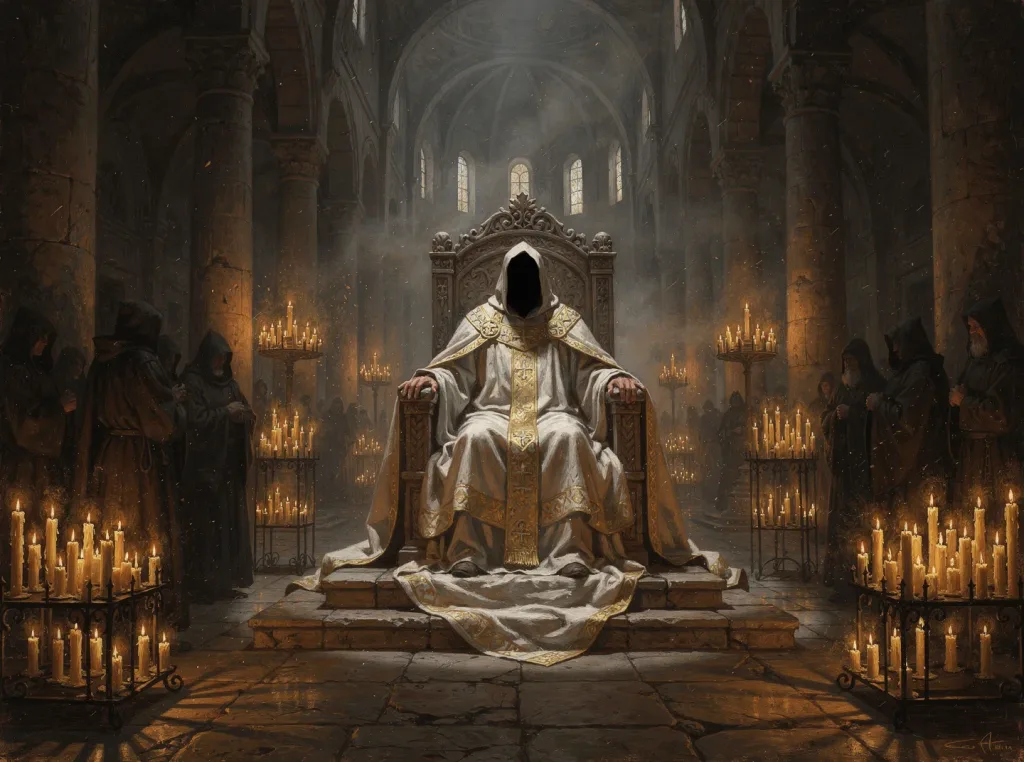
The Cadaver Synod: When Rome Put a Dead Pope on Trial in 897.
Rome, January 897. The body of Pope Formosus is dug up, dressed in papal vestments and seated on a throne to be cross-examined.
This is not a legend, nor an invention of later chroniclers. The trial of a dead pope really took place, several independent sources describe it, and church historians know it as the Cadaver Synod.
In January 897 the body of Formosus, who had died some nine months earlier, was carried into the Lateran basilica. The corpse was dressed in papal robes and propped on a throne. Facing it sat the reigning pope, Stephen VI. Beside it stood a young deacon whose task was to answer on the dead man's behalf.
How Rome came to this
The late ninth century was the darkest period in the history of the papacy. The throne of St Peter had become a prize fought over by Italian noble factions. Between 896 and 904 Rome went through nine popes, and many of them were deposed, imprisoned or murdered.
Formosus was caught between two powers. On one side stood the house of Spoleto, which controlled Rome and claimed the imperial crown. On the other stood the East Frankish king Arnulf of Carinthia. In 896 Formosus invited Arnulf into Italy and crowned him emperor, cancelling out the Spoletan claims.
The gamble failed. Arnulf was struck by paralysis, withdrew across the Alps and soon died. The Spoletans returned to Rome, and they returned with a question: what to do about the acts of the late pope.
The charge
Formosus was accused of perjury and of holding the papal throne unlawfully: he had been bishop of Porto, and by moving to the see of Rome he had broken the canons forbidding a bishop to transfer from one see to another.
The charge sounds technical, almost bureaucratic, the kind of thing normally settled by correspondence rather than by digging a man out of his grave.
The deacon speaking for the corpse lost, of course. The synod found Formosus guilty. All his acts and ordinations were declared void.
The sentence
The papal vestments were stripped from the body and replaced with lay clothing. The three fingers of the right hand used to give blessings were cut off. The corpse was dragged through the streets and thrown into the Tiber.
According to tradition a monk pulled the body from the river and buried it in secret. Under later popes it was returned to St Peter's.
What became of the judge
Retribution came quickly. That same year an earthquake brought down part of the Lateran basilica, and the crowd took it as a sign. A revolt broke out against Stephen VI; he was deposed, thrown into prison and strangled there.
The popes who followed overturned and restored the verdict of the Cadaver Synod more than once. Formosus was rehabilitated, then condemned again under Sergius III, and the later papacy quietly set that condemnation aside. A synod under John IX forbade any future trial of the dead, a rule that exists precisely because of this case.
A question with no agreed answer
Historians still disagree about what this trial really was. Did Stephen VI act on his own initiative, or was he carrying out someone else's plan? Was the trial an outburst of personal hatred, or a cold calculation with a specific beneficiary?
What troubles them is the disproportion. The charge was a canonical technicality. The spectacle was monstrous, staged before all of Rome, with an exhumation, a throne and a sentence passed on a corpse. That is not how one punishes a breach of procedure.
So the trial must have served some other purpose, one worth all of this. And since that purpose was not the dead man's, the question remains: whose was it?
This article does not reveal the solution to the investigation